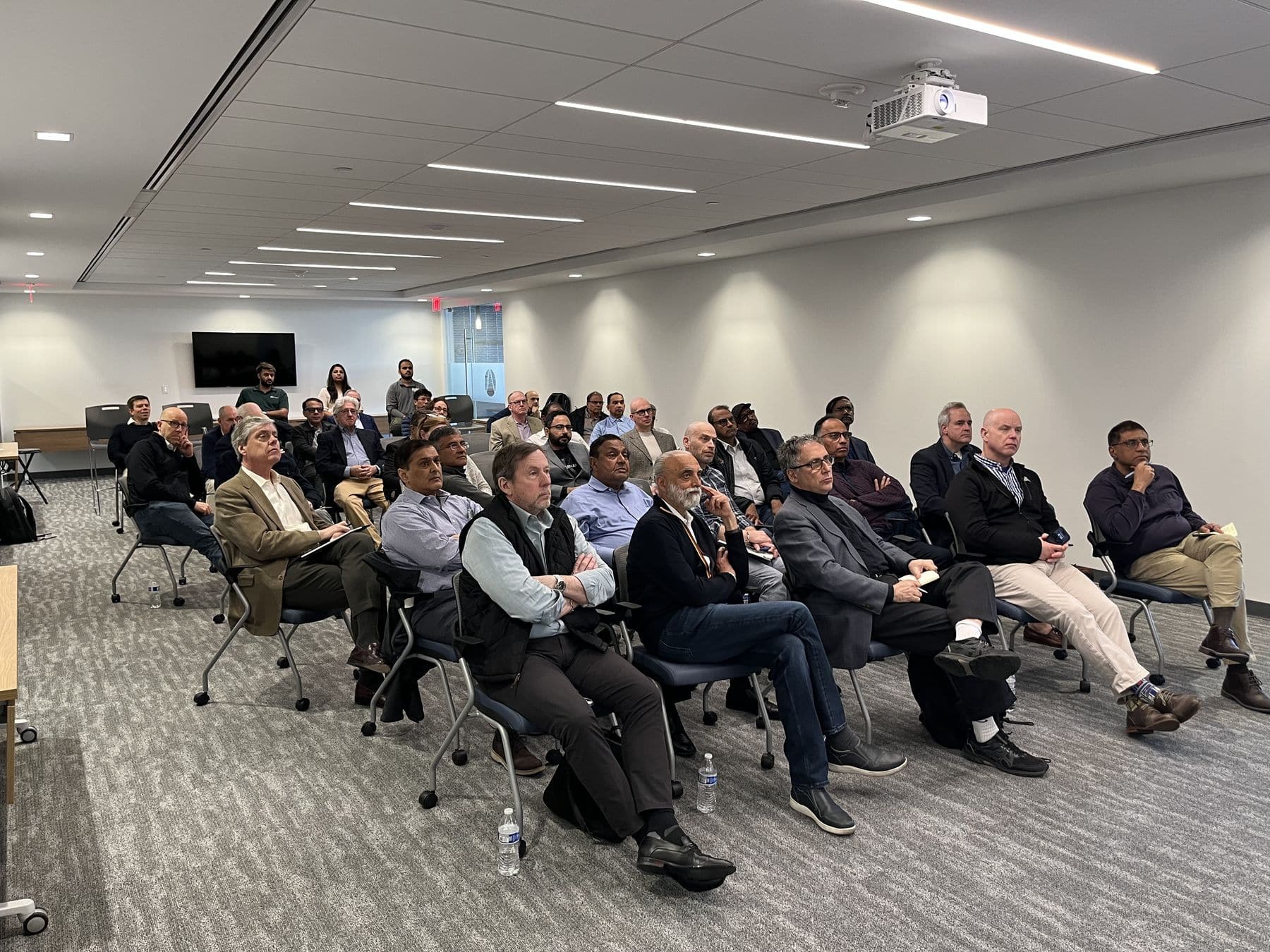
About the session
Instead of starting with technology, John Sipple shared an alternative approach developed at Google over the past eight years that starts with a real problem and then composes a unique business-specific solution that leverages techniques across the AI spectrum. We believe this is a reusable framework for effectively applying AI to solve real-world problems.
Artificial Intelligence is rapidly expanding in many directions, but the truly novel business use applications mostly arise from creative compositions of these multiple and diverse techniques. The additive effect from merging two or more techniques amplifies the probability of achieving a breakthrough business success, something that returns a truly positive ROI. Composition enables us to make life better, make business more efficient, and enable our machines to assist us with tasks requiring increasingly higher levels of intelligence.
In this talk, John started with a common example (RLHF), then guided us through examples that connect with increasingly sophisticated business value:
RLHF: Compositing policy gradient reinforcement learning with sequence transformers to achieve state-of-the-art text generation.
Pre-deep Learning: Compositing tricks to create state-of-the-art nonlinear classifiers that will up the game in fault detection, diagnostics, and other business functions.
Intelligent Diagnostics: Combining noise-contrastive estimation, deep learning anomaly detection, explainable AI, and causal reasoning in LLMs to connect monitoring of low-level signals with root cause analysis of faults
Composing novel solutions with AI requires more than learning how to employ Large Language Model APIs, like Gemini or ChatGPT. It requires understanding the fundamental concepts (first principles) -- and the strengths, constraints, and limitations of these approaches. It requires growing and acquiring a working knowledge of the fundamental concepts that enable these powerful methods and technologies.